
Tennis is often called “chess in motion”. But unlike chess, where every player starts with the same set of pieces, in tennis your “toolkit” depends entirely on your technical skillset. Your technical arsenal is your collection of solutions for every situation on court.
In this article, we’ve broken down the wide variety of tennis techniques into clear, logical sections — from the fundamentals every player needs to the advanced skills that make tennis one of the most exciting sports in the world.

Block I. Taking Control Early: Serve & Return
Every rally begins with the serve, and it’s the only shot in tennis where the outcome depends entirely on you. Professional players don’t see the serve as simply a way to “get the ball into the box” — they use it as a powerful weapon to put immediate pressure on the opponent.
A complete serving arsenal includes three main types of serves:
- the flat serve, which delivers maximum speed with minimal spin;
- the slice serve, which makes the ball stay low and move sideways after the bounce;
- the kick serve, where the ball travels in a high arc before jumping sharply upward, pushing the opponent out of their comfort zone.
One of the secrets of an effective serve is disguise. The toss should look nearly identical for every type of serve, making it difficult for your opponent to predict what’s coming until the very last second.
Fun fact: The fastest officially recorded serve belongs to Australian player Sam Groth at 263 km/h (163.4 mph) — faster than the takeoff speed of many private jets.

Photo: championat.com
Returning serve is far more than simply hitting the ball back. Your job is to neutralize your opponent’s advantage immediately. Unlike standard baseline shots, there’s no time for a full backswing, so a strong return relies on compact movement and using the incoming pace against the server.
The key here is the split step — that small but explosive movement timed exactly as your opponent makes contact with the ball, allowing you to react instantly in any direction.

Block II. The Foundation of the Game: The Baseline Battle
This is where around 80% of match play happens. Matches are often won from the baseline through consistency, endurance, and smart shot selection.
The two essential tools here are the forehand and backhand.
The forehand is often considered the signature shot of a player’s game. At the professional level, it’s far more than a simple power shot. It’s a complex kinetic sequence where the wrist remains relaxed, the racket head “lags” behind, and then accelerates explosively through contact, creating heavy topspin.
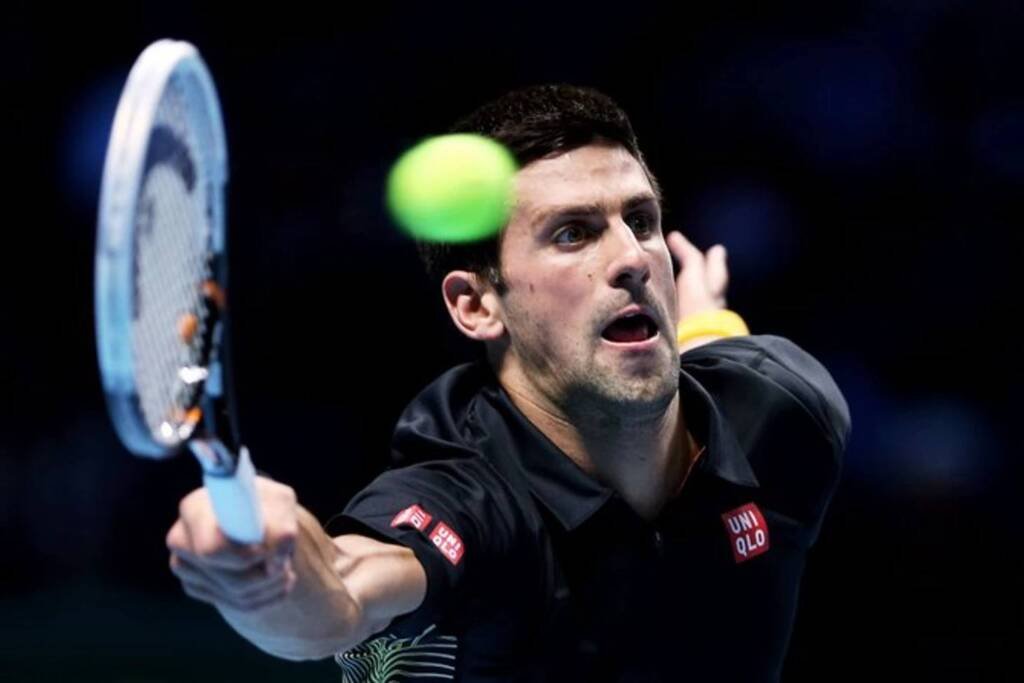
Photo: Clive Brunskill/Getty Images
This topspin gives players an ideal combination of safety and aggression: the ball clears the net comfortably while still dipping sharply into the court, often deep near the baseline.
The backhand is generally considered more difficult to master, but it’s often a true marker of a player’s level. Most modern players prefer the two-handed backhand for its stability and ability to generate powerful counterattacks.

That said, the one-handed backhand remains one of tennis’s most elegant shots. It offers greater flexibility in creating angles and makes transitions into slice shots much more natural.
Block III. Attack & Finish: The Net Zone
Once you decide to move forward and take control at the net, your game needs to become faster, simpler, and more decisive.
There’s no time for long swings here — this is where the volley comes into play.
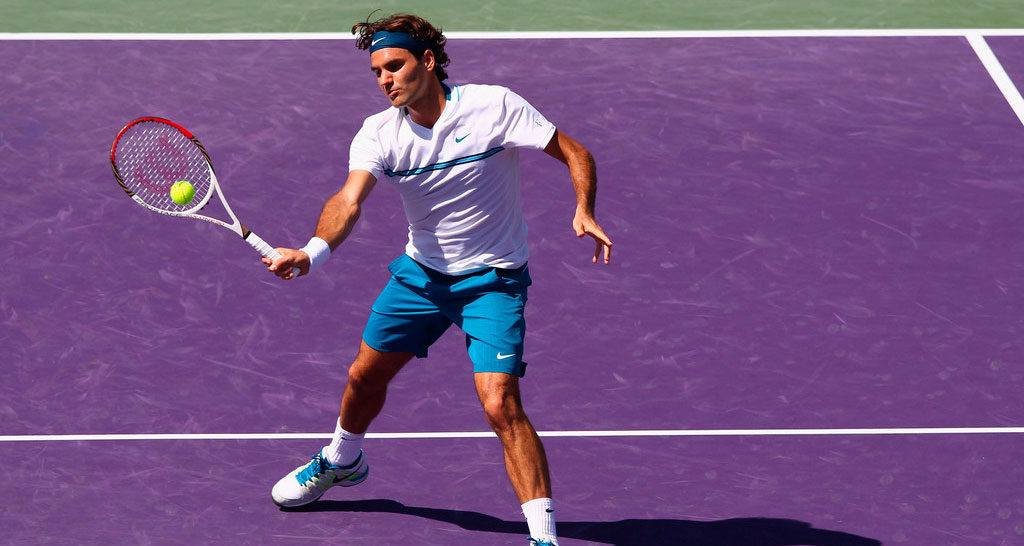
The defining feature of a good volley is a stable wrist and compact movement. At contact, the racket should feel firm, simply redirecting the energy of the incoming ball into open court. Volleying is about precision, positioning, and reflexes — not raw power.
If your opponent panics and tries to send a high defensive lob over your head, it’s time for one of the most aggressive shots in tennis: the smash. Biomechanically, the smash resembles a serve, but it’s executed during open play. Professionals often think of the smash as “the full stop at the end of the sentence” — if positioned correctly, it usually ends the point.
Cross Court Tip: One of the most common mistakes beginners make at the net is trying to hit the ball too hard. Instead, think about blocking it. Imagine your racket as a wall — the ball should simply bounce off it in the direction you choose.
The Foundation Is Set — What’s Next?
A reliable serve, confident baseline play, and effective net skills form the strategic foundation of any tennis match. These elements allow a player to control momentum of the match, stay solid under pressure, and build a complete all-court game.
But modern tennis requires more than consistency — it demands variety.
In Part 2, we’ll move beyond the core building blocks and explore the shots that disrupt an opponent’s rhythm, create tactical advantages, and often decide the most critical moments of a match.