Tennis is one of the few sports where external conditions can completely transform the way the game is played. While in many sports the surface is secondary, in tennis it influences everything — from your tactical decisions to the physical load on your body.
As of 2022, the International Tennis Federation (ITF) has officially recognized nearly 300 types of court surfaces. To simplify things, all of them are variations of three fundamental categories: grass, clay, and hard courts.
At Cross Court Academy, we believe that true mastery begins with the ability to adapt your game to what’s under your feet.
Grass: Speed and Tradition
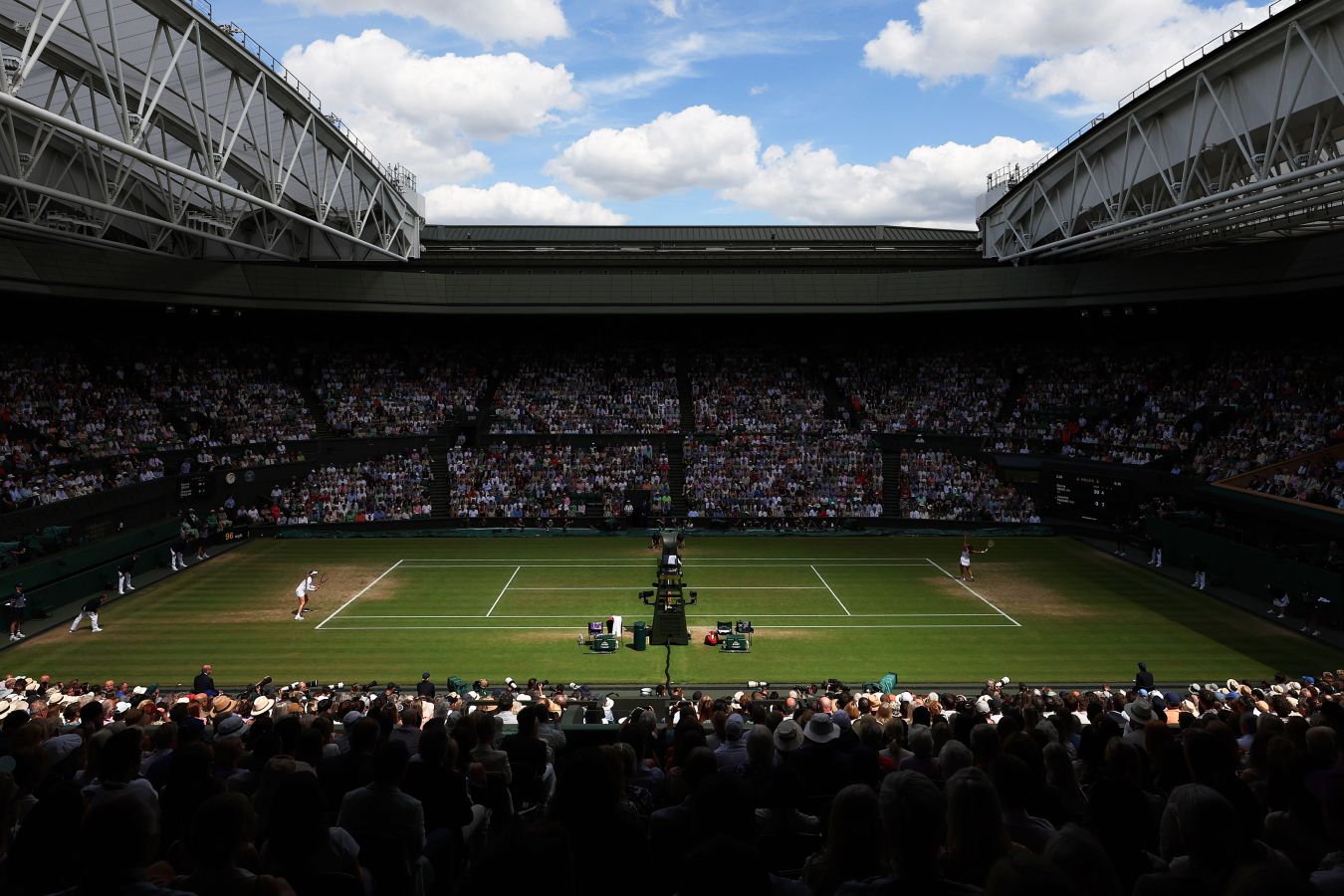
Tennis originally evolved as lawn tennis, making grass the oldest and most traditional surface. It’s a true “sprinter’s court”: the ball doesn’t bounce much — it skids, staying fast and low.
- Key characteristics: Grass offers very little time to react. There’s no room for slow preparation or big swings.
- Tactics: Points are short and aggressive. The most effective style is serve and volley. Slice shots become especially dangerous, as the ball stays extremely low after the bounce.
- Iconic tournament: Wimbledon — the ultimate symbol of grass-court tennis.
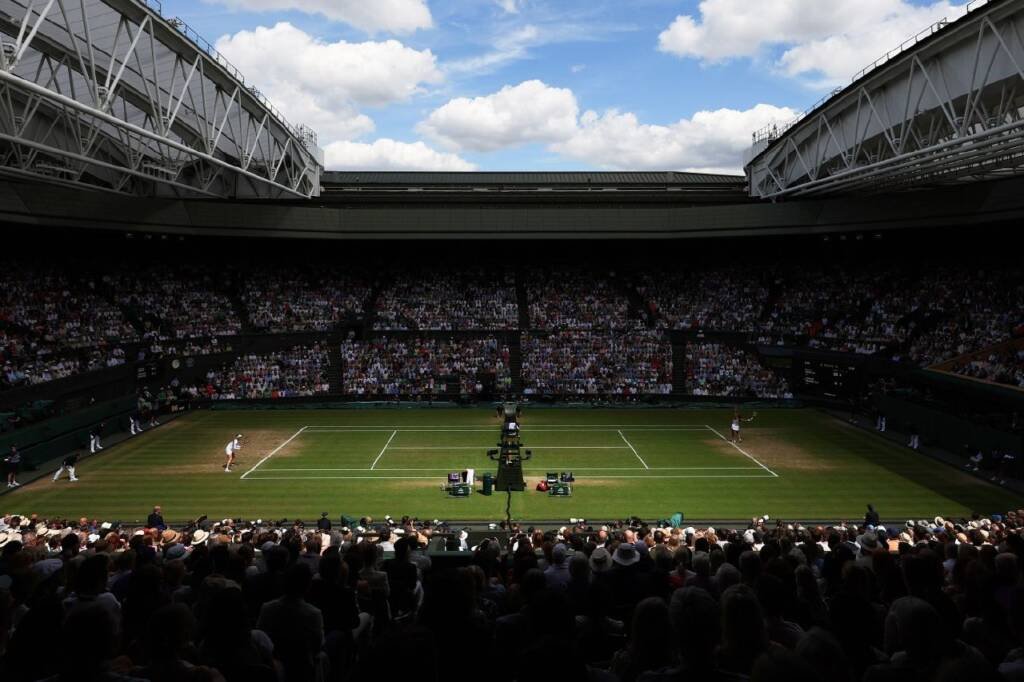
Photo: championat.com
Clay: Endurance and Strategy
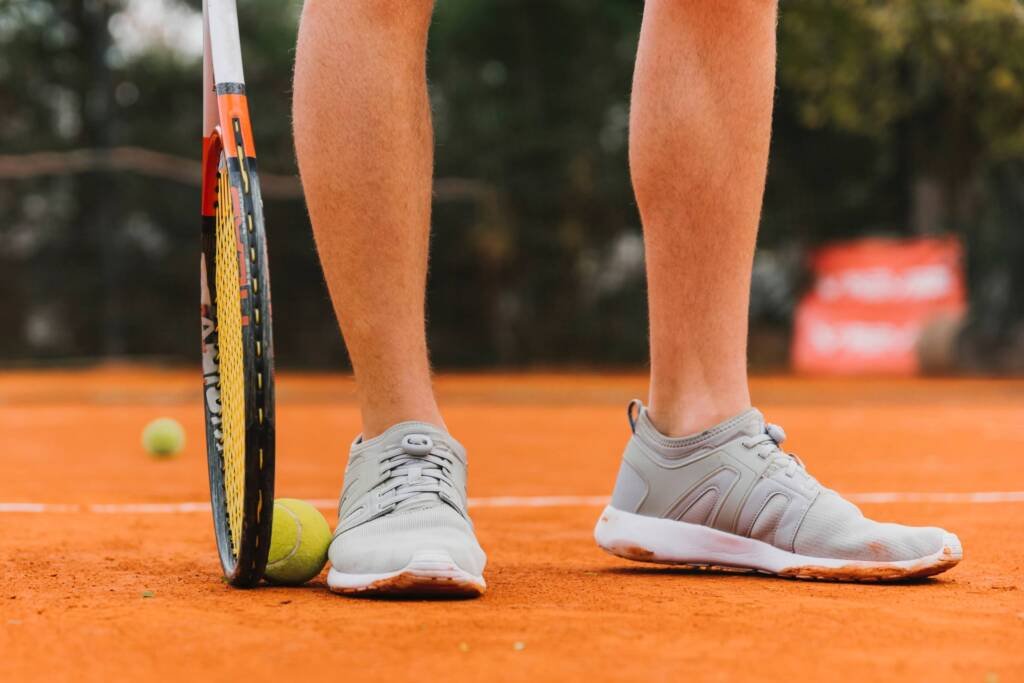
Clay courts (made from crushed brick, stone, and shale) are the complete opposite of grass. They are the slowest surface in tennis. The porous texture reduces the ball’s speed while producing a higher, more pronounced bounce.
- Key characteristics: The defining skill on clay is controlled sliding. Players can start preparing for their shot while moving into position.
- Tactics: Clay is the domain of endurance and patience. It’s difficult to win points with a single powerful shot, so players build rallies using heavy topspin to push opponents out of position.
- Iconic tournament: Roland Garros (French Open) — the pinnacle of the clay season.
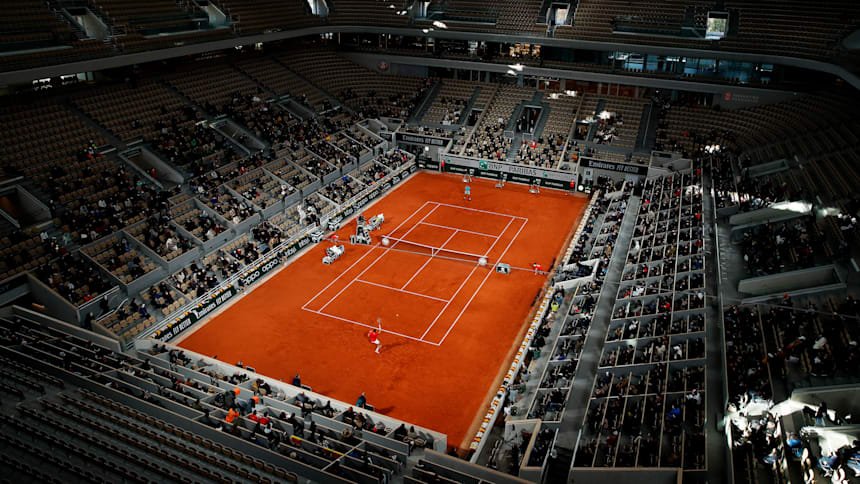
Photo: olympics.com
Hard Courts: The Modern Standard
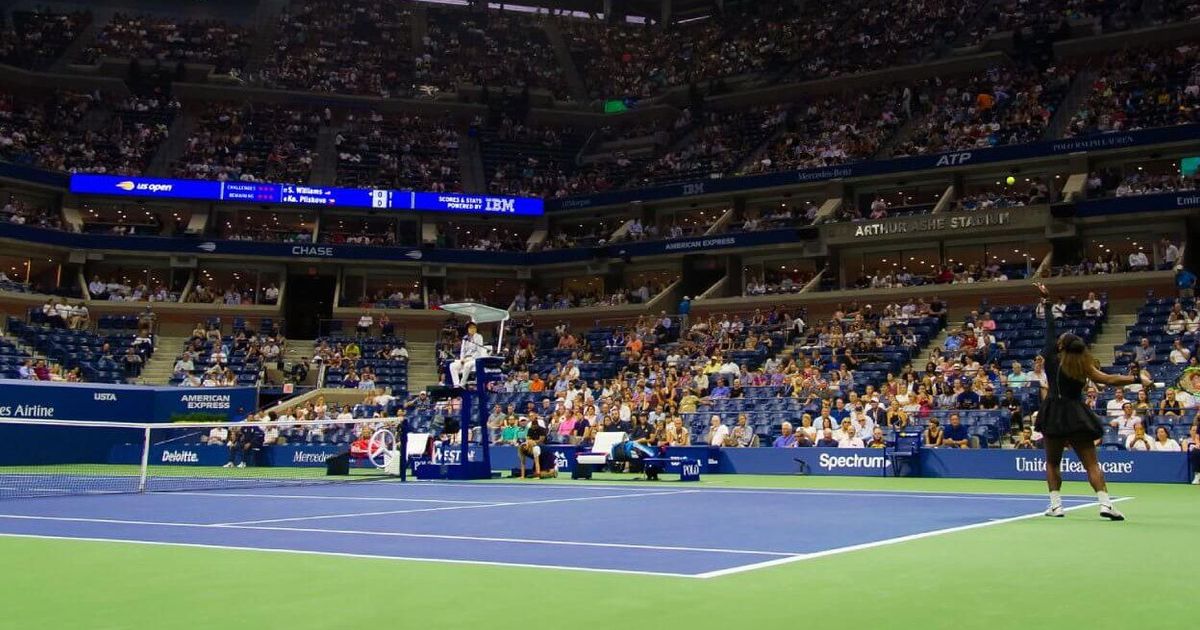
Hard courts are synthetic surfaces built on concrete or asphalt. They are the most common courts worldwide, offering medium speed and the most predictable bounce.
- Key characteristics: Hard courts provide excellent traction, allowing explosive movement and sharp direction changes. However, they also place significant stress on joints.
- Tactics: This surface rewards all-around players. Both powerful serves and consistent baseline play are equally effective.
- Iconic tournaments: Australian Open and US Open.
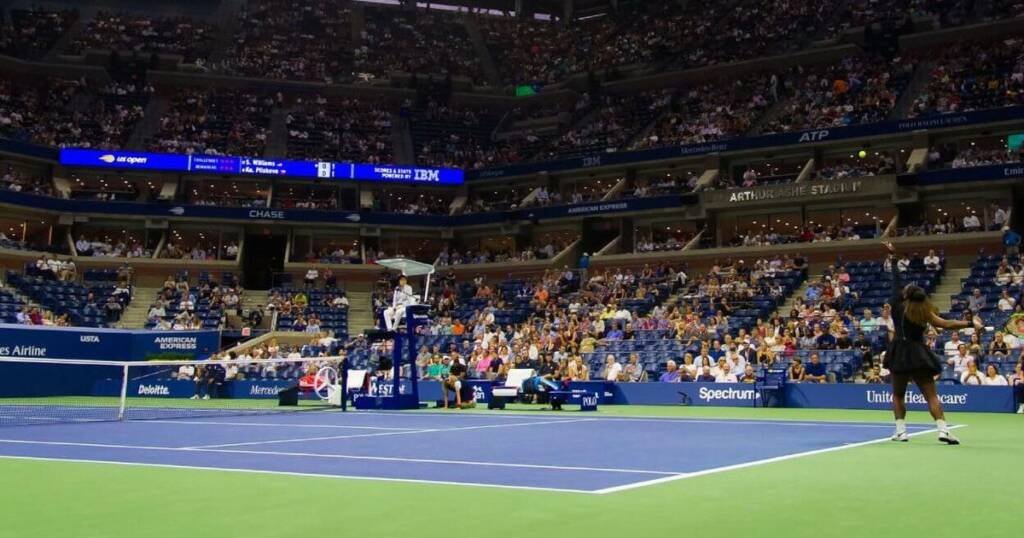
Photo: wtatennis.com
Why Hard Courts Dominate in Dubai
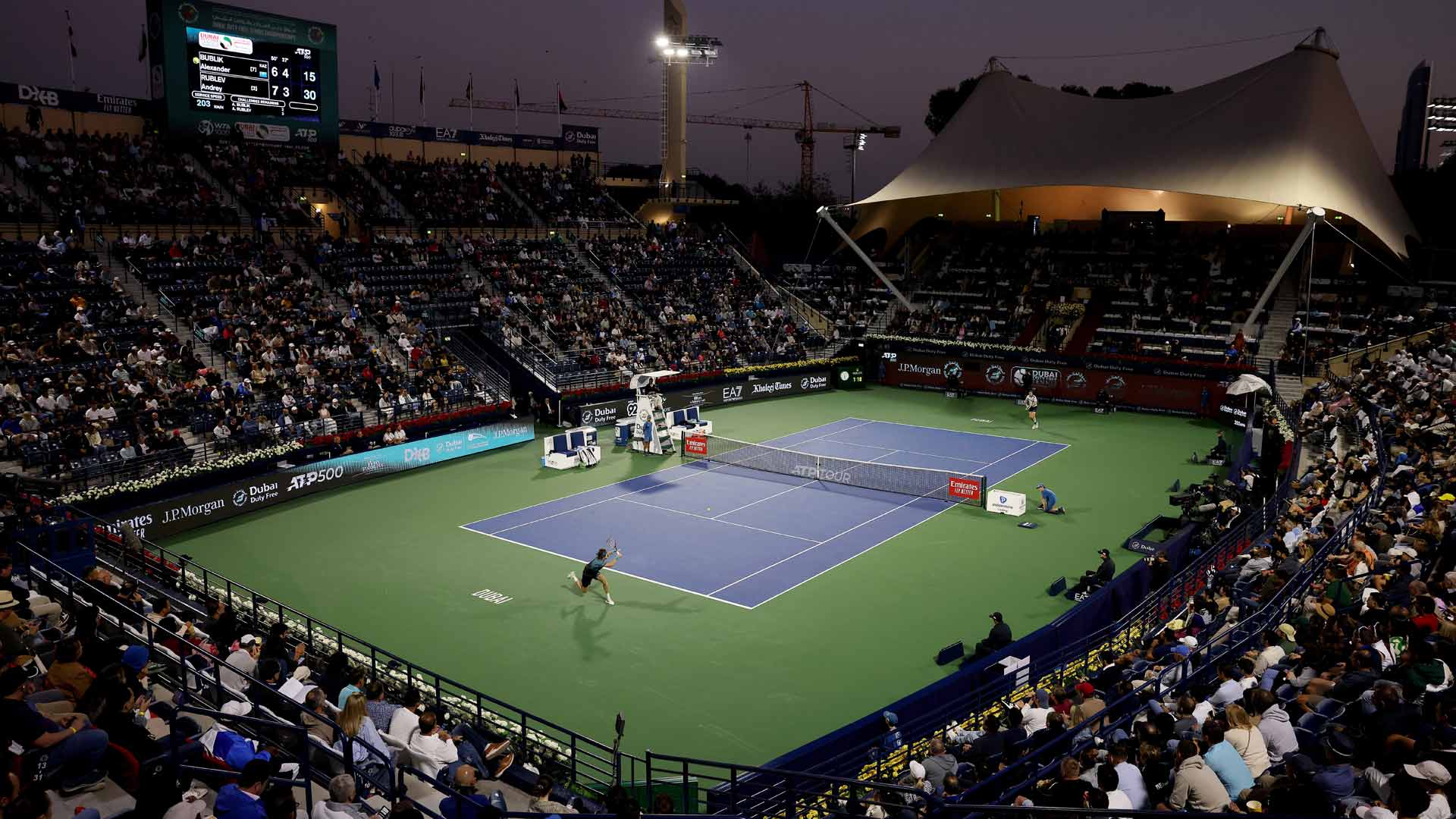
In the UAE, hard courts are the clear standard — and for good reason. The climate plays a major role: extreme heat and low humidity make maintaining clay (which requires constant watering) or grass nearly impossible. Hard courts, on the other hand, remain stable in high temperatures and require far less maintenance. That’s why the region’s premier tournament, the Dubai Duty Free Tennis Championships, is played on hard courts.
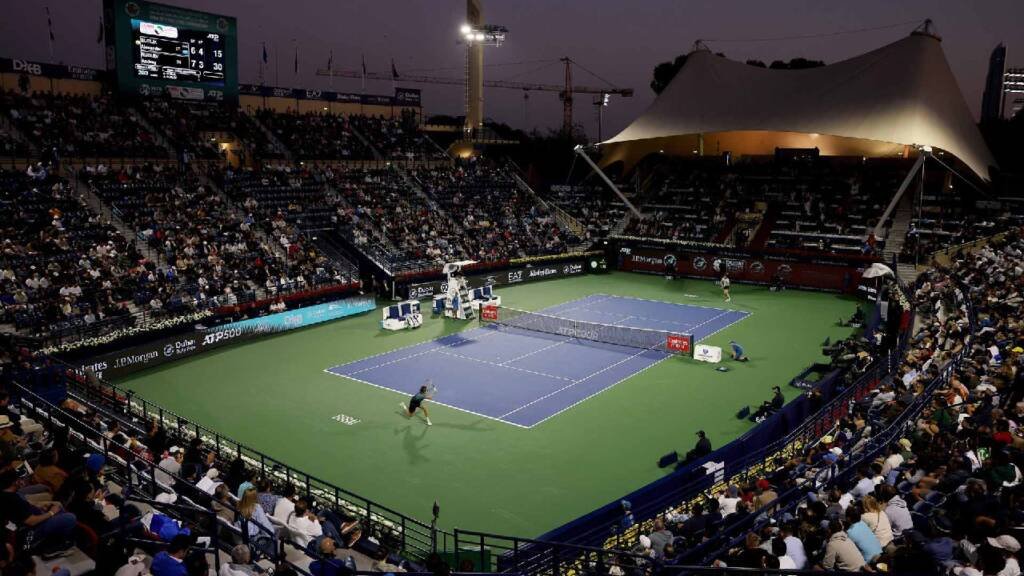
Photo: atptour.com
Which Surface Is Right for You?
A common question players ask is: “Which surface suits me best?”. The answer depends on your playing style and physical attributes:
- If you like to dictate play, have quick reactions, and rely on a strong serve — fast courts (grass, hard) will suit you best.
- If your strength is endurance, consistency, and outlasting your opponent — clay is your ideal surface.
- If you are a well-rounded player who values technique and stability — hard courts will test and develop your full skill set.
That said, modern tennis rewards versatility. The ability to adjust your timing and technique across surfaces is what truly defines a high-level player.
How to Adapt Your Game
Switching surfaces requires adjustments in several key areas:
- Timing: On grass, you need shorter, quicker swings to handle fast, low balls. On clay, you have more time and can use a longer, more fluid swing.
- Footwork: Hard courts demand precise steps and quick stops. Clay requires controlled sliding. Grass calls for small, quick adjustment steps to maintain balance.
- Equipment: Clay shoes feature a herringbone pattern for grip and clay release. Hard court shoes are more durable and built for impact resistance.
Final Thoughts
Court surface is not just a detail — it’s a fundamental variable that shapes every aspect of the game. A skilled tennis player is defined by their ability to adapt their technique to different conditions.
At Cross Court Academy, our coaches help players develop this flexibility — so you feel confident no matter what’s under your feet, whether it’s fast hard courts or slow clay.
See you at Cross Court — where you learn to win on any surface.