
Tennis is a game of angles and distances. Most mistakes aren’t caused by poor technique, they come from choosing the wrong shot at the wrong moment. At Cross Court Academy, we teach what we call the “traffic light system“: a tactical framework that trains players to instantly read risk based on where they’re standing on the court.
Know Your Court
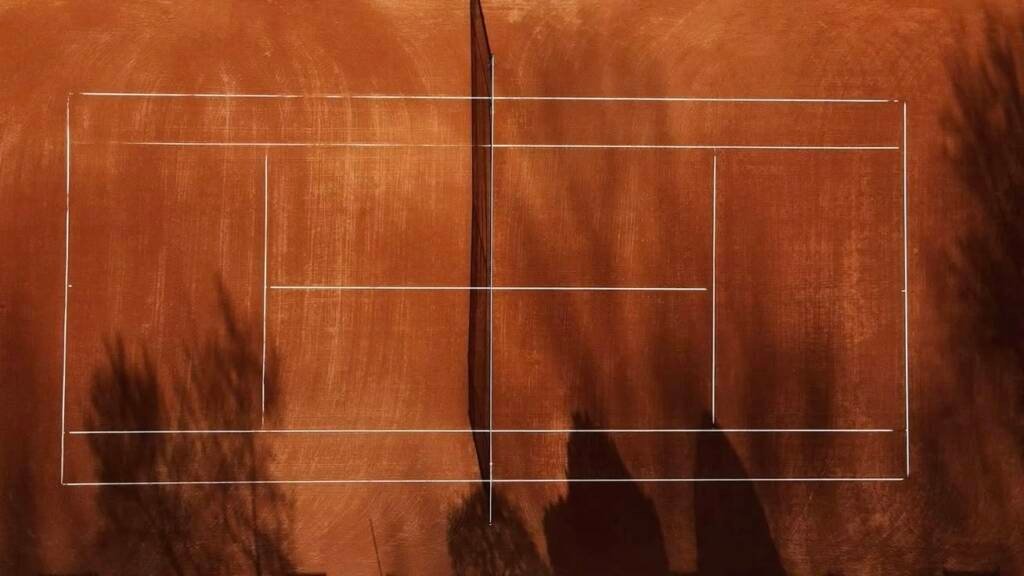
Before we get into zones, it helps to know what you’re working with. A standard singles court is 23.77 meters long and 8.23 meters wide.
A few things worth keeping in mind:
The Baseline marks where deep defense begins. The Midcourt is the stretch between the baseline and the service line — transition territory. The Net sits at 0.914 m in the center and 1.07 m at the posts. That 15 cm difference is exactly why hitting crosscourt is considered the safer play — you’re clearing the lowest part of the net.
Why Zones Matter
The traffic light system splits the court into three tactical areas. Each color tells you how aggressive you can afford to be. Instead of just trading balls and hoping for the best, you’re making deliberate decisions — saving energy and cutting down on unforced errors.
🔴 Red Zone — Survive
- Where: 1.5–3 meters behind the baseline.
- You’re in damage control. Your angles are limited, and the ball has a long way to travel before it reaches your opponent.
- What to do: Hit high and deep. Buy yourself time.
- Real-world example: Nadal is the gold standard here. His extreme topspin lets him send the ball so high and deep from behind the baseline that opponents simply can’t do anything productive with it.

🟡 Yellow Zone — Build
- Where: Around the baseline, roughly a meter either side.
- This is where you’re feeling things out — building a pattern, testing whether your opponent can handle the pressure.
- What to do: Hit tight to the corners without overreaching. Wait for a short ball.
- Real-world example: Djokovic owns this zone. He doesn’t go for broke — he just keeps pushing opponents wider and wider until they crack.

🟢 Green Zone — Attack
- Where: Inside the court (midcourt area).
- The ball landed short. That’s your green light. Take it.
- What to do: Hit an approach shot, move forward, close out the point.
- Real-world example: Federer and Alcaraz are masters of this — the moment they sense a short ball, they’re already moving in and finishing at the net.

Common Problems (And Why They Happen)
“Why do I keep hitting into the net?”
You’re probably trying to rip a flat ball from the red zone. The farther you are from the net, the higher your margin needs to be — aim roughly 1.5 to 2 meters above the tape.
“I move into the court but the ball keeps going long.”
You’re putting in too much of your own power. In the green zone, the court is shorter — you don’t need to swing hard. Work with the pace already on the ball and add spin through your wrist instead.
“How do I know when to switch zones?”
Watch where the ball lands. If it bounces on or inside the service line, that’s your automatic trigger to shift from yellow to green.
A Word of Caution
The traffic light system gives you a solid foundation — but tennis is always happening in real time. The right call depends on more than just where you’re standing:
- Surface matters. Clay slows everything down, so the red zone can actually work in your favor. On fast grass or hard courts, hanging back too long is a trap.
- Your opponent matters. If you’re playing someone who retrieves everything, you may need to take on more risk even from the yellow zone.
- The match situation matters. Score, fatigue, momentum — all of these can push you toward a more conservative approach even when the green light is technically on.
The takeaway
Tactical awareness is what separates players who compete from players who just hit balls. Understanding your court zones gives you mental clarity when the pressure is on. At Cross Court Academy, our coaches work to make these reads automatic — so when you’re out there, you’re not thinking. You’re just playing.