Look, in tennis, matches can be won or lost over the tiniest things that most people don’t even think about. There’s this whole thing called “feel” in tennis, and it doesn’t start with your strings like you might think. It starts right where your fingers touch the racket.
Here at Cross Court Academy, we always say your gear is basically part of your body when you’re playing. If your grip is shot, you’ve lost that connection.
Getting the terminology straight
A lot of people starting out mix these up, but there are actually two different types of grip:
- Replacement Grip: This is the main layer, usually leather or synthetic (about 1.5–2.1 mm thick), that wraps around the handle itself. It’s there for cushioning and to keep the bevels of the handle defined.
- Overgrip: This is the thin layer (0.4–0.7 mm) you put over the base grip. This is what really matters for how the racket feels in your hand, how it absorbs your sweat, and how well you can hold onto it.
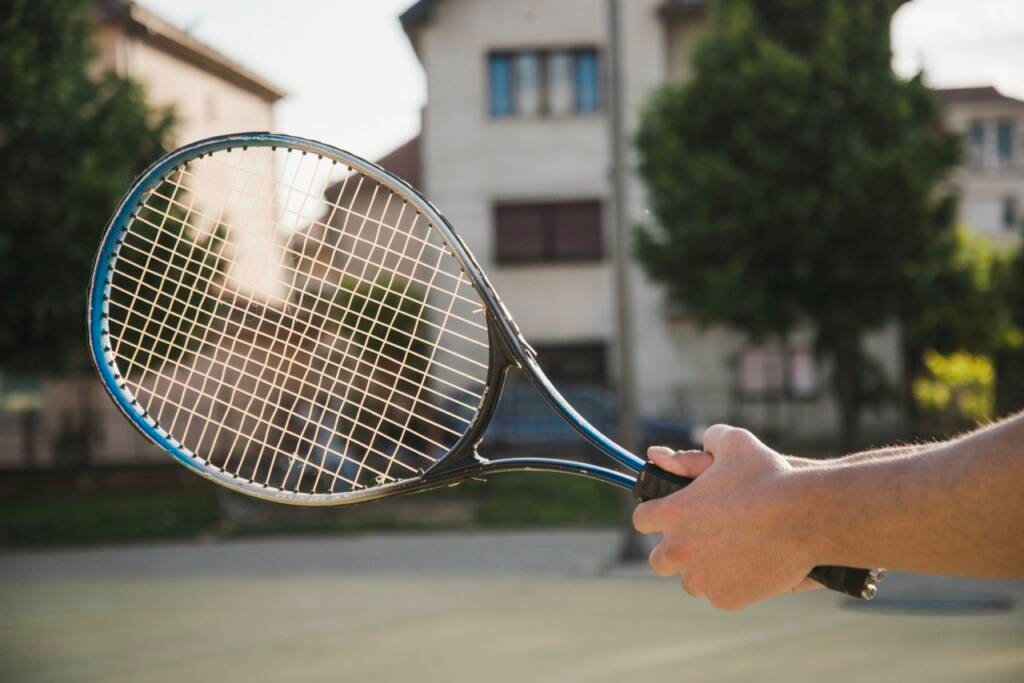
Here’s something wild: just 0.2 mm more thickness can bump your grip size up a whole level, which actually changes how freely your wrist can move.
Why changing your grip on time matters for safety
- Preventing tennis elbow: When your grip gets worn and slippery, you end up squeezing way harder without even realizing it (that’s called a “death grip”). That constant tension in your forearm? That’s how you end up with tennis elbow.

- Hygiene and bacteria: The porous material in overgrips holds onto 5 times more bacteria than your regular workout clothes. Basically, it’s a sweat and dirt sponge that you’re gripping for hours.
- Precision down to the millimeter: A slick grip means your racket can twist a tiny bit on impact. When you’re hitting a ball going 150 km/h, even a one-degree twist means you’re missing by 1.5 meters.
Types of grips: What to choose?
Our coaches always keep both types on hand because different conditions call for different grips:
- Tacky: These give you maximum traction. Great if your hands don’t sweat much. The racket feels locked into your hand.
- Dry/Absorbent: Tourna Grip is probably the most famous. The cool thing is they actually grip better when they get wet. That’s why pros love them when it’s humid out.
How to know when it’s time to change your grip
Pros swap out their overgrip every 2–4 hours they’re on court. For the rest of us, here’s what to watch for:
- It feels slick or hard, like there’s no cushion left.
- You can see stains, worn patches, or shiny spots.
- The racket’s starting to slip in your hand when you hit hard.
Tips for wrapping your grip
Getting your racket ready is honestly just as important as practicing your strokes. Here are some tips from the Cross Court team:
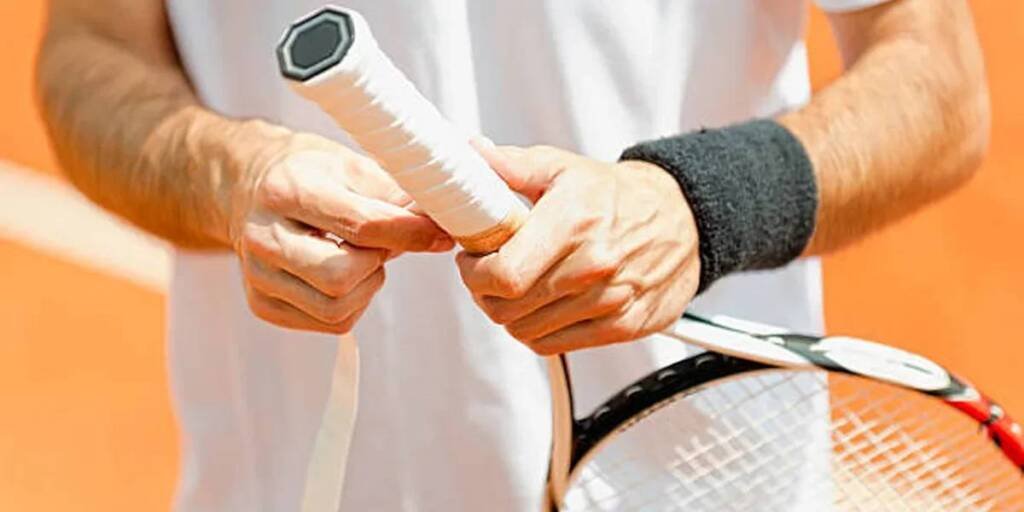
- Direction of the wrap: Right-handers wrap clockwise (if you’re looking at the bottom of the handle). Lefties go the other way. This keeps your fingers from catching the edges when you grip.
- Keep the overlap consistent: Each wrap should cover about 2–3 mm of the previous one. Go too wide and the handle feels lumpy, and you can’t feel the bevels anymore.
- Preserve the bevels: You want to feel those bevels on the handle. That’s how you change grips without having to look down at your racket.
Wrapping up
At Cross Court Academy, we’re not just teaching stroke technique. We’re teaching people how to take care of their equipment properly. Playing at a high level comes down to all these little things: how tight your strings are, how your racket’s balanced, and yeah, keeping a fresh grip on there.
If you’re ever unsure about which grip to buy or how to put it on, just ask. Our coaches are always happy to show you the tricks and share what they’ve learned.