
There is a common belief that the only way to improve your game is simply to spend more time on court. This is a dangerous misconception.
Modern tennis is a high-intensity athletic sport. Up to 50% of your success in a match is determined by your physical conditioning away from the court.
A tennis player’s physical preparation is built around two key pillars: a strong foundation of strength, which is most effectively developed in the gym, and explosive reactions and coordination, which can be trained anywhere, even at home or against a wall.
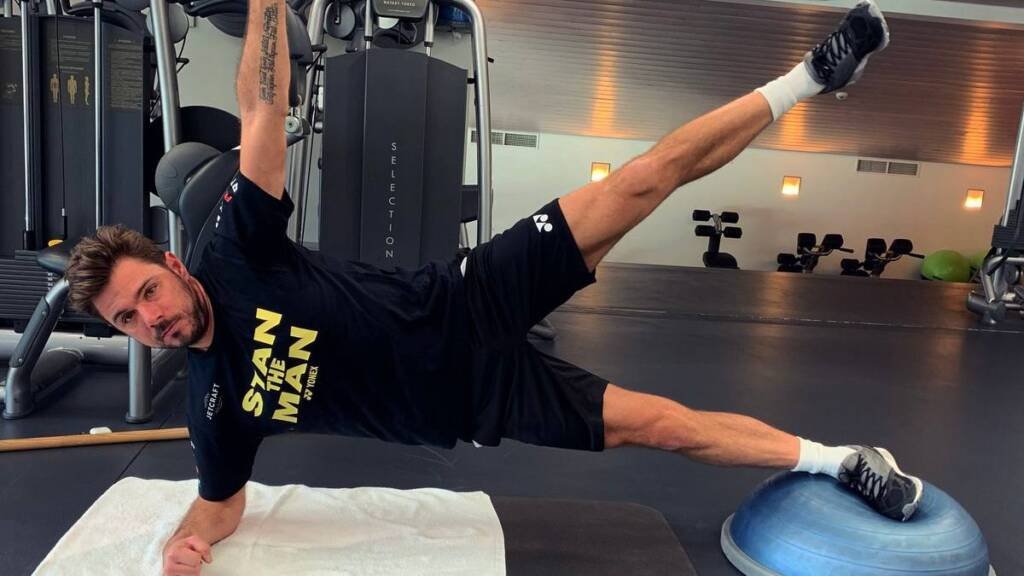
In this first part of the article, we will take an in-depth look at the “heavy artillery”: gym training. We will explain how to build a rock-solid strength foundation, protect your joints from wear and tear, and convert muscle strength into pure speed and explosive shot power.
The main objectives of off-court gym training
Effective strength training for tennis has nothing in common with traditional bodybuilding. The aim is not to increase muscle size, but to improve functional performance. Gym sessions should address three key areas:
- Developing explosive strength and rotational power. A tennis stroke does not begin with the arms, but with the legs. Force travels from the feet through the hips and torso, before reaching the shoulder and racket. This is known as the kinetic chain. Gym training teaches the body to generate maximum force within a fraction of a second. This is crucial for an explosive first step towards a drop shot, a powerful serve and penetrating winners from the baseline.
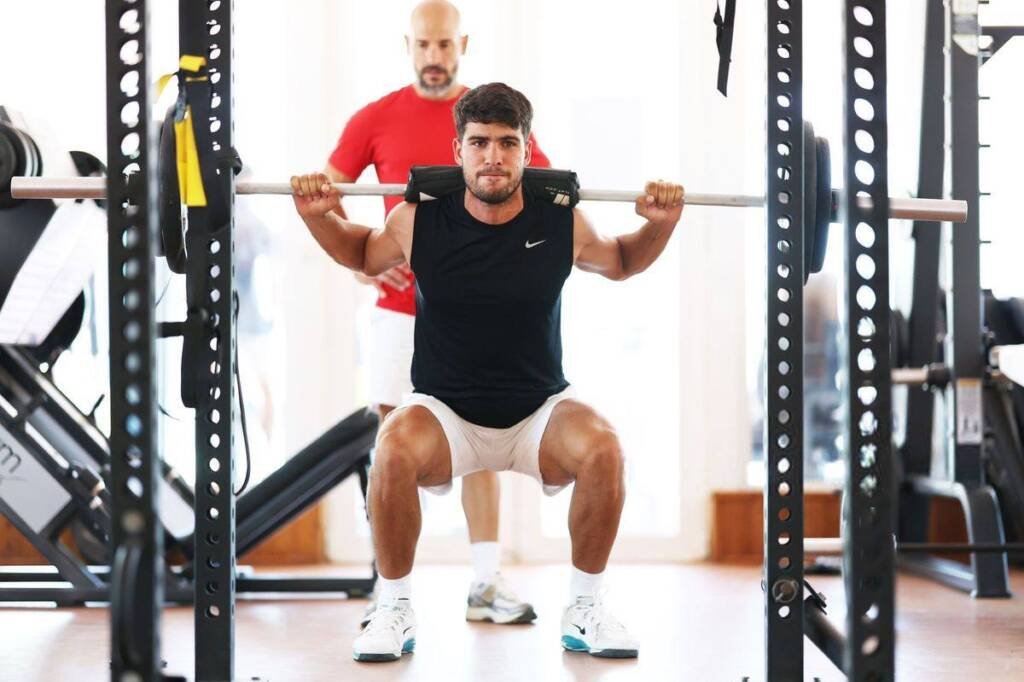
- Multi-directional mobility and stability. Unlike running or cycling, where movement generally takes place in a single plane of motion, tennis players are constantly moving laterally, rotating sharply and performing deep lunges. In the gym, we develop mobility in key joints, such as the shoulders, hips and ankles, while also strengthening the muscles that stabilise them. This allows players to strike the ball from difficult, low or stretched positions without losing control.
- Building armour against injury. Tennis is an asymmetrical sport that imposes enormous eccentric (decelerating) loads on the body. Stopping suddenly after a sprint places significant stress on the knees and ankles, while the rapid acceleration involved in hitting a shot can overload the shoulder and lower back. Strength training reinforces the core, the muscles responsible for joint stability and the shoulder’s rotator cuff. This is your main line of defence against tennis elbow, knee problems and other common tennis injuries.
Gym exercise routine: transferring strength to the court
We recommend performing this workout as a circuit. This develops not only strength but also tennis-specific endurance, that is, the ability to recover your breathing quickly between points.
- Format: Move from one exercise to the next, resting for 45-60 seconds between exercises.
- Circuit: After completing all four exercises, rest for three minutes.
- Complete a total of three to four full circuits.
1. Rotational medicine ball throws against a wall
This exercise closely replicates the biomechanics of the forehand and backhand. It teaches the body to transfer energy from the legs, through the rotation of the torso and into the shot.

- Technique: Stand side-on to a wall, approximately two to three metres away. Position your feet slightly wider than shoulder-width apart and bend your knees slightly. Hold a 3-5 kg medicine ball in both hands beside the hip furthest away from the wall. Using a powerful, explosive movement, rotate your feet and hips towards the wall, turn through your torso and throw the ball forcefully against it. Catch the ball as it rebounds and immediately return to the starting position.
- Sets and reps: Three sets of 10-12 powerful throws on each side.
2. Box jumps
Box jumps directly improve your vertical jump for an overhead smash and the speed of your first step when moving towards the net.

- Technique: Stand in front of a stable platform or box approximately 50-70 cm high. Bend your knees, swing your arms backwards and jump explosively upwards. Land softly on the box with both feet in a partial squat. Straighten your legs, stabilise your position and carefully step back down. Do not jump down, as this places unnecessary stress on the knees.
- Sets and reps: Three sets of 8-10 repetitions.
3. Standing resistance band rows
This exercise strengthens the muscles surrounding the shoulder blades and the rear deltoids. These muscles are responsible for rapidly decelerating the arm after a stroke and protecting the shoulder joint from dislocation and small muscle or tendon tears.
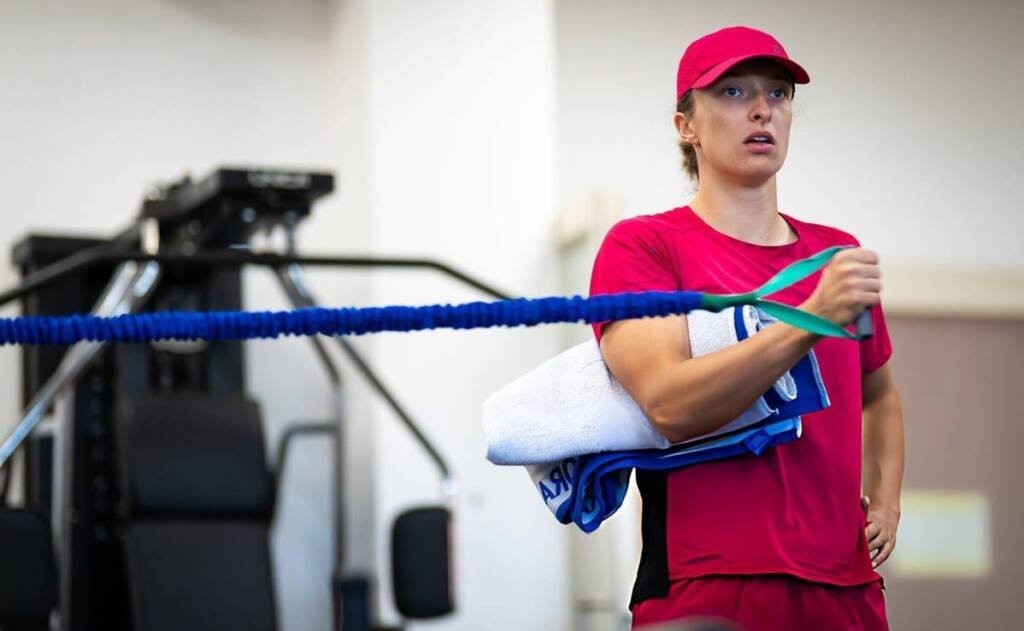
- Technique: Secure the resistance band to a stable support at chest height. Hold the handles and take a step backwards to create tension in the band. Adopt a stable stance. As you breathe out, pull the band towards the lower part of your chest, focusing on drawing your shoulder blades together while keeping your shoulders down. Slowly and under control, return your arms to the starting position.
- Sets and reps: Three sets of 15 repetitions.
4. Single-leg Romanian deadlifts
This exercise develops balance and hamstring strength while reinforcing the small stabilising muscles around the ankle, helping to prevent ankle rolls on hard courts.
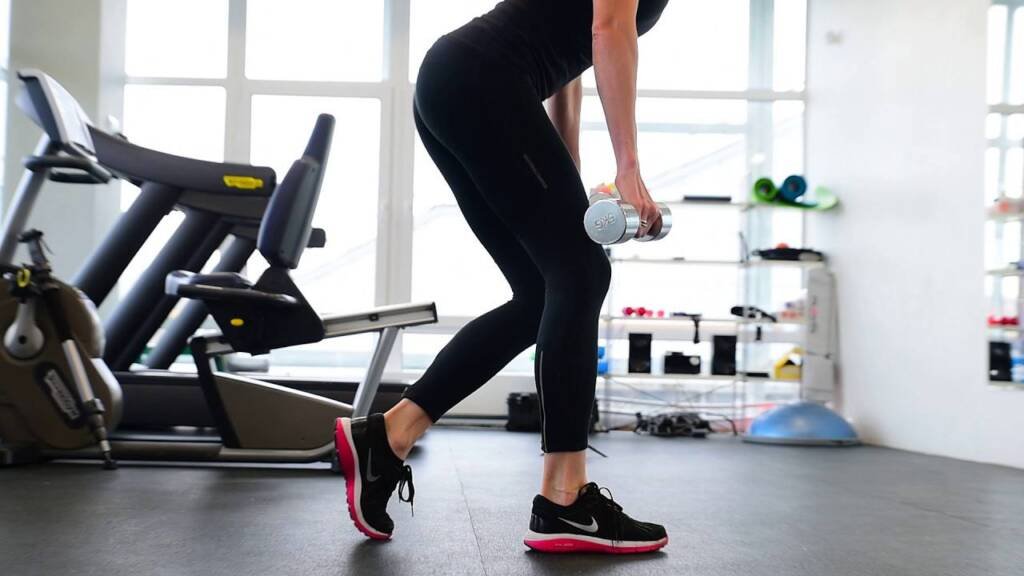
- Technique: Hold a light dumbbell or kettlebell. Stand on your right leg, with your left foot slightly raised. Slowly lean your torso forwards while extending your left leg behind you, keeping a straight line from your head to your left heel. Keep the supporting leg slightly bent. Feel the tension in the glute of the supporting leg, then use that leg to drive yourself back into an upright position.
- Sets and reps: Three sets of 10 repetitions on each leg.
Guidelines for structuring your training
To make sure your gym sessions improve your tennis rather than leaving your muscles excessively tight or fatigued, follow these three strict rules:
- Do not train to failure. Your objective is speed and coordination, not muscular failure. End the set as soon as you feel the speed or quality of the movement beginning to decline.
- Train twice a week on non-tennis days. Your body needs sufficient time for recovery and supercompensation.
- Technique is more important than weight. Technical errors made with heavy weights in the gym can quickly transfer onto the court in the form of poor movement patterns.
Strength training in the gym is a long-term investment. With regular training, you should begin to notice heavier, more penetrating shots and easier movement around the court within three to four weeks.
Conclusion
The gym gives a tennis player strength and physical protection, but without lightning-fast reactions and coordination, that power cannot be used effectively. To win points, your brain must read the trajectory of the ball instantly, while your feet must adjust to every type of bounce.
In the next part, we will move on to training at home and explain how to develop hand-eye coordination, peripheral vision and tactical decision-making speed without any specialist equipment. We will look at simple wall-based exercises that can serve as an effective alternative when you do not have access to a full tennis court.